
How to Choose the Right Social Media Platform for Your Business
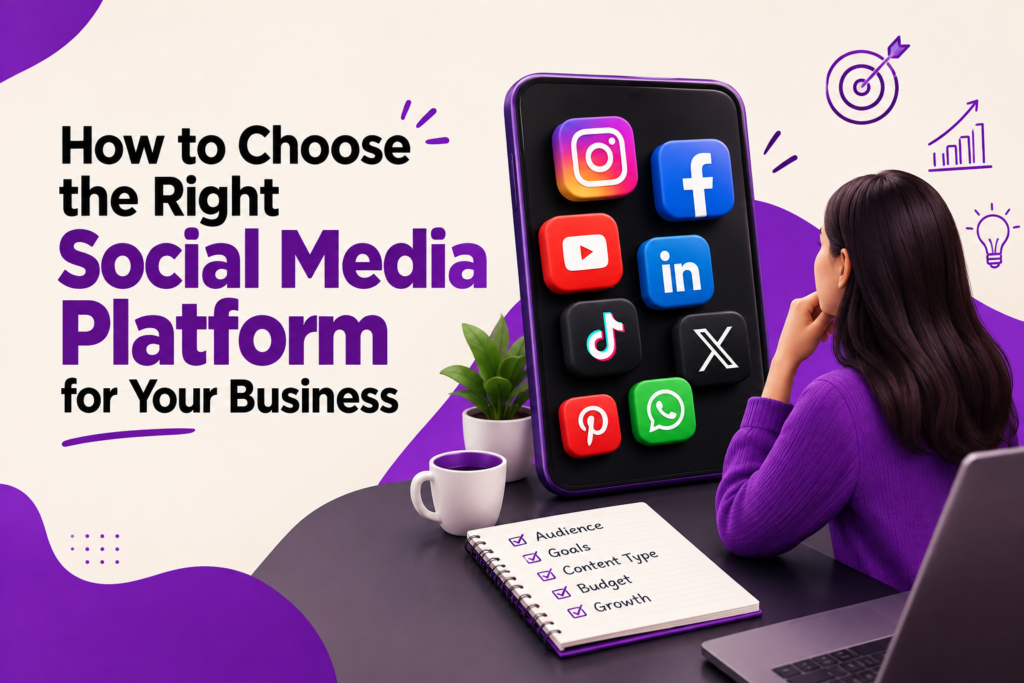
Trying to run every social platform at once is one of the fastest ways to burn out and see little return. Each platform has its own audience, content style, and pace — and a strategy that works on one can fall flat on another. Instead of spreading effort thin, the smarter move is picking the platform (or two) where your ideal customers actually spend their time, and doing that well.
Here’s how to figure out which one that is.
1. Start With Your Audience, Not the Platform
Before thinking about features or trends, get clear on who you’re trying to reach. Age, profession, interests, and buying habits all influence where people spend their time online.
- Younger, visually driven audiences tend to gather on Instagram and TikTok.
- Professionals and B2B buyers are more active on LinkedIn.
- Broad, older demographics still spend significant time on Facebook.
- People searching for inspiration or planning purchases often turn to Pinterest.
- Real-time conversations, news, and niche communities cluster on X and Reddit.
If you already have customers, look at where they engage with brands like yours before assuming.
2. Match the Platform to Your Content Strengths
Every platform rewards a different kind of content, so it helps to think about what you can realistically produce well and often.
- Visual, product-based businesses (photography, fashion, food, design) tend to thrive on Instagram and Pinterest, where imagery does the selling.
- Service-based or expertise-driven businesses (consulting, coaching, B2B services) often perform better on LinkedIn, where credibility and thought leadership carry weight.
- Entertainment or trend-driven brands find traction on TikTok, where short, authentic video wins over polish.
- Community-driven or support-heavy businesses may find Facebook Groups useful for building a loyal following around shared interests.
Choosing a platform that plays to your natural content strengths makes consistency far easier to maintain.
3. Consider the Buying Journey
Different platforms serve different points in a customer’s decision-making process. Someone scrolling Instagram might be browsing casually, while someone searching Pinterest is often actively planning a purchase or project. Someone on LinkedIn may be researching a business solution with intent to buy soon.
Think about where your typical customer is mentally when they’re most receptive to discovering you — early inspiration, active research, or ready-to-buy — and choose a platform that matches that stage.
4. Look at What Competitors Are Doing (Then Decide Differently)
Checking where similar businesses are active can reveal where the audience already exists. But don’t just copy — notice where competitors are strong and where they’re weak. A crowded, competitive space on one platform might mean there’s an underused opportunity on another where your business could stand out with less noise.
5. Weigh Your Available Time and Resources
Every platform demands a different type of effort. Video-first platforms like TikTok and Instagram Reels take more editing time. LinkedIn favors well-written, thoughtful posts. Pinterest rewards a steady stream of well-designed pins over time rather than daily posting.
Be honest about what you can consistently produce with the time, tools, and team you have. One platform done consistently well will almost always outperform three platforms updated sporadically.
6. Test Before Committing Fully
Once you’ve narrowed it down to one or two likely platforms, treat the first few months as a test. Track basic signals:
- Are people engaging (comments, saves, shares) — not just viewing?
- Are profile visits turning into inquiries, clicks, or sales?
- Does creating content there feel sustainable, or does it constantly feel like a struggle?
If engagement and inquiries grow steadily, that’s a sign you’ve found the right fit. If not, it may be worth shifting focus rather than pushing harder on the wrong platform.
7. Don’t Be Afraid to Specialize
Many successful businesses run lean — focusing deeply on just one or two platforms instead of maintaining a weak presence everywhere. A wedding photographer, for example, might get far more traction from a polished Instagram and Pinterest presence than from also trying to maintain TikTok, X, and Facebook simultaneously.
Specializing allows for better content quality, more consistent posting, and a clearer brand voice — all of which build trust faster than a scattered, inconsistent presence across many platforms.
The Bottom Line
The “right” social media platform isn’t the one with the most users — it’s the one where your specific audience is already active, where your content style naturally fits, and where you can show up consistently without burning out. Start narrow, measure what works, and expand only once you’ve built real traction on the platform that fits your business best.
Choosing the Right Social Media Platform for Your Business: The Key to Smarter Marketing
Choosing the right social media platform is not about being everywhere—it’s about being where your audience is most active. Understanding your audience, goals, content type, and resources helps you focus on the platforms that can deliver better results.
Ready to improve your social media strategy?
👉 Explore more digital marketing tips, strategies, and insights on my website.