
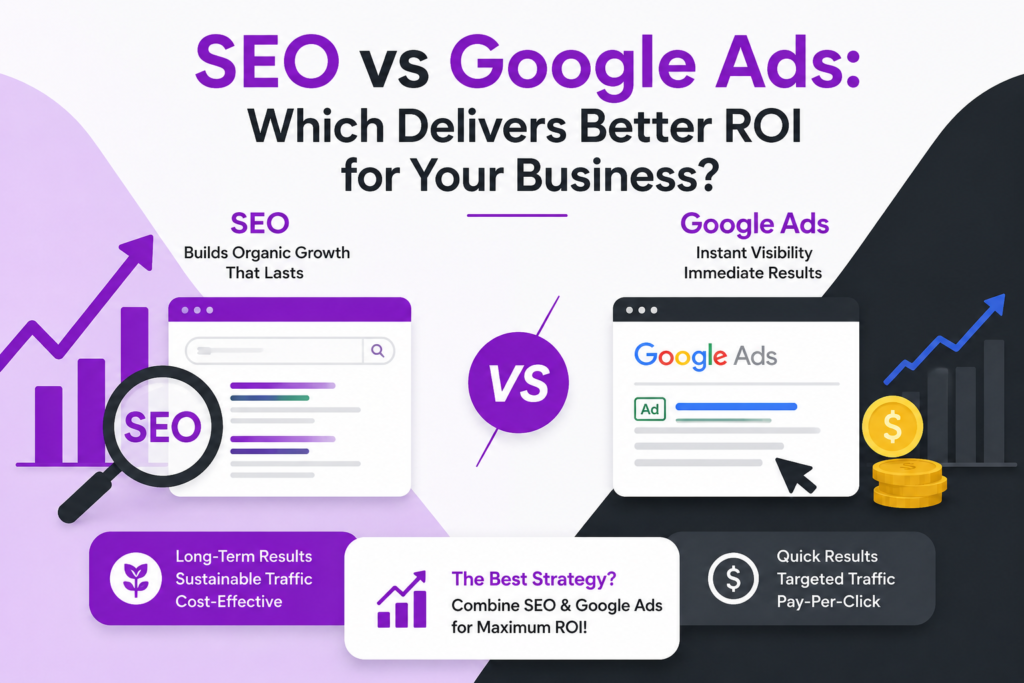
SEO vs Google Ads: Which Delivers Better ROI for Your Business?
If you’re weighing where to put your marketing budget, SEO and Google Ads are almost always the two options on the table. Both can bring in traffic, leads, and sales — but they get you there in very different ways, and on very different timelines.
I’m Shibly, a freelance digital marketing strategist in Nilgiris, and over the years I’ve watched businesses win with both approaches and struggle when they pick the wrong one for their situation. There’s no universally “better” option here. The right call depends on your budget, how competitive your industry is, and how soon you actually need results. This guide breaks down both paths so you can decide with confidence, rather than guessing.
What SEO Actually Does
Search Engine Optimization is the work of shaping your website so search engines rank it higher for relevant, unpaid searches. Instead of paying per click, you earn visibility by publishing genuinely useful content, tightening up your site’s technical structure, and steadily building authority in your niche.
What you gain from SEO:
Traffic that keeps arriving without ongoing ad spend
Credibility that paid placements can’t fully replicate
A cost-per-lead that trends downward as your rankings improve
A better overall site experience for visitors
Broader brand recognition over time
Growth that compounds rather than resets each month
Where SEO gets hard:
It’s slow — momentum takes months, not days
It demands continuous upkeep, not a one-time setup
Crowded industries require sustained, deliberate effort
Algorithm updates can shift the rules with little warning
Think of SEO as planting rather than renting the payoff builds gradually, but it keeps paying out long after the initial work is done.
What Google Ads Actually Does
Google Ads is a pay-per-click system that puts your listing right at the top of search results the moment someone searches a relevant term. You’re charged only when someone clicks through — not for simply being shown.
It’s the go-to option when you need eyes on your business now, and want to reach people actively searching for exactly what you sell.
What you gain from Google Ads:
Visibility starting the same day your campaign launches
Leads that can arrive within hours, not months
Precise targeting down to specific search intent
Budgets you can adjust daily as needed
Granular data on exactly what’s converting
A natural fit for promotions, launches, and seasonal pushes
Fast experimentation with offers and landing pages
Where Google Ads gets hard:
The traffic disappears the moment your budget does
Clicks can get pricey fast in competitive niches
It needs hands-on management, not a set-and-forget approach
An unmanaged campaign can burn through spend with little to show for it
Google Ads rewards speed and attention it’s powerful when actively managed, and wasteful when left alone.
So Which One Wins on ROI?
Ultimately, it depends on your specific goals.
SEO tends to be the right call when you want to:
Build visibility that compounds over years, not weeks
Lower your cost of acquiring customers over time
Grow organic traffic without paying per visitor
Position your brand as a genuine authority
Keep generating leads without an ongoing ad bill
SEO often delivers better long-term ROI since published content continues to generate results well after it’s posted.
Google Ads is typically the right choice when you want to:
Start generating leads right away
Get a new product or service in front of buyers fast
Push a time-sensitive offer or promotion
Break into a competitive market where organic ranking will take too long
Quickly test whether a campaign concept even works
Run and monitored well, Google Ads can produce strong short-term returns sometimes within days.
Why Most Smart Businesses Use Both
Rather than treating this as an either/or decision, the strongest strategies I build as a digital marketing expert in Nilgiris usually combine both channels. Here’s the logic:
Ads fill the visibility gap while SEO is still building momentum.
Paid search data shows you which keywords actually convert intelligence you can feed straight into your SEO plan.
As your organic rankings improve, your reliance on paid traffic naturally shrinks.
Running both means more touchpoints for customers to find you, not just one.
Used together, you get leads now and a durable traffic engine for later instead of choosing one at the expense of the other.
Getting More Out of Either Strategy
Regardless of which channel you invest in or both these fundamentals matter:
Keep your website fast and genuinely mobile-friendly.
Publish content that’s actually useful, not just keyword-stuffed filler.
Target the right keywords on the right pages.
Measure conversions, not just clicks or impressions.
Refine landing pages based on how people actually use them.
Test your headlines, CTAs, and offers rather than guessing.
Let real performance data not assumptions guide your next move.
Ongoing optimization, more than any single tactic, is what determines whether your budget is well spent.
The Bottom Line
SEO and Google Ads aren’t rivals they’re two halves of a strategy that, used well, cover each other’s weaknesses.
If your priority is durable, long-term growth, SEO is one of the smartest investments available. If you need leads fast, Google Ads gets you there quicker. Most businesses that do well long-term end up running both, balancing quick wins against sustainable growth.
The right plan isn’t a template it’s one shaped around your specific goals, audience, and budget.
Ready to Build Yours?
Not sure whether SEO, Google Ads, or a mix of the two fits your business best? As a freelance digital marketing strategist in Nilgiris, I help businesses figure that out and build a plan around it.
Whether you’re chasing more traffic, better-qualified leads, or stronger sales, let’s talk through what makes sense for you.